
Do Wellness Studios Need Client Sleep, Stress, and Recovery Metrics?
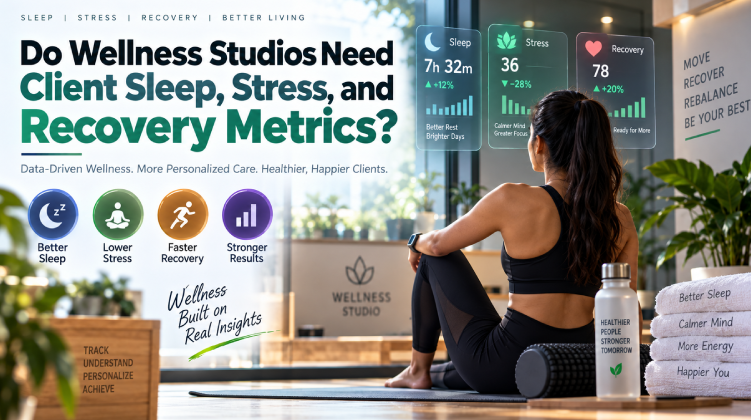
Wellness studios are increasingly expected to provide more than massages, movement sessions, nutrition advice, or recovery treatments. Clients want services that respond to how they actually feel and function. This creates a practical question for studio operators: should sleep, stress, and recovery indicators become part of the service, or do they add more data than value?
The answer depends on how those indicators are used. A client’s evening routine may include work, exercise, streaming, reading, or digital entertainment accessed through a wonderland casino app, and each activity can affect bedtime, stimulation, and next-day readiness. A wellness studio does not need to monitor every behavior. It does, however, benefit from understanding patterns that influence whether a client responds well to a program.
Sleep Data Can Explain Why the Same Service Produces Different Results
Two clients can receive the same recovery session and report different outcomes because they arrive with different sleep histories. One may have slept eight hours for several nights, while another may have had four nights of restricted sleep.
Without this context, a studio might interpret the difference as a problem with the service. Sleep information can help explain why perceived fatigue, soreness, concentration, and exercise tolerance vary.
The useful metrics are often simple: sleep duration, bedtime consistency, wake time, number of disturbed nights, and the client’s own rating of sleep quality. Studios do not need to collect every available sleep variable. The goal is to identify whether sleep is supporting or limiting progress.
Stress Metrics Add Context to Physical Symptoms
Stress is harder to measure than steps or sleep duration because it has both physiological and psychological components. A client can appear physically recovered while experiencing work pressure, family demands, travel, or financial concerns.
For wellness studios, stress data becomes useful when it changes service decisions. A client who normally tolerates intense training, heat exposure, or demanding recovery protocols may respond differently during a high-stress period.
Studios can combine self-reported stress scores with other indicators such as resting heart rate, sleep disruption, energy levels, or changes in routine. None of these signals should be treated as a diagnosis. Their purpose is to show whether the client’s overall load is increasing.
Recovery Scores Are Useful Only When Their Components Are Understood
Many devices and platforms produce a single recovery or readiness score. The number can look precise, but it is usually based on several inputs and an algorithm.
A wellness studio should avoid treating such scores as absolute instructions. A low value does not automatically mean that the client should cancel exercise or book a recovery treatment. A high value does not prove that the person is ready for maximum effort.
The score becomes more useful when the studio understands what changed. Was sleep shorter? Did resting heart rate rise? Was activity unusually high the previous day? Has the client reported soreness or illness?
Interpretation matters more than the headline number.
Better Data Can Improve Service Selection
Sleep, stress, and recovery metrics can help studios decide which service is most appropriate on a given day.
For example, a client with stable sleep, low soreness, and good energy may tolerate a demanding mobility or conditioning session. A client with reduced sleep, high stress, and accumulated fatigue may benefit more from lower-intensity movement, breathing work, mobility, or a shortened session.
This creates a more responsive service model. Instead of selling the same protocol each time, the studio adjusts the intervention based on current conditions.
The commercial benefit is also relevant. Better matching can improve perceived value because clients see a direct connection between their state and the service they receive.
Metrics Can Help Track Whether a Program Works
Wellness businesses often struggle to demonstrate outcomes because many services are evaluated through subjective feedback alone.
Tracking sleep, stress, recovery, energy, and adherence over several weeks can create a clearer before-and-after picture. If a program aims to improve recovery, the studio can compare trends in fatigue, sleep consistency, soreness, and readiness before and during the intervention.
This does not prove causation. Clients may change their work schedule, diet, training, or medication at the same time. However, trends provide more information than relying only on a client saying that they feel “better.”
Too Much Data Can Reduce the Quality of the Service
More metrics do not automatically improve personalization. A studio that collects dozens of indicators may create a dashboard that neither staff nor clients can interpret.
There is also a risk of making clients overly focused on numbers. Someone may feel energetic but become concerned because a device produced a low recovery score. This can shift attention away from bodily awareness and toward constant monitoring.
The studio should therefore define which metrics influence decisions and ignore those that do not. A small set of consistent indicators is usually more useful than a large amount of disconnected data.
Privacy and Consent Must Be Built Into the Process
Sleep, stress, and recovery data can reveal details about routines, health patterns, and daily behavior. Studios should treat this information as sensitive.
Clients need to understand what is being collected, why it is needed, how it will be stored, and who will see it. Participation should be voluntary, and the studio should collect only the information required for the stated purpose.
Clear policies reduce both privacy risk and operational complexity.
Wellness Studios Need Context More Than They Need More Numbers
Sleep, stress, and recovery indicators can improve wellness services, but only when they are connected to practical decisions. Their value lies in explaining why a client feels different from one week to the next and helping the studio adapt the service accordingly.
The strongest model combines objective indicators with client feedback, professional judgment, and clear goals. Studios do not need to turn every visit into a data analysis session. They need enough information to understand the client’s current state and determine whether the planned intervention still makes sense.
When used this way, sleep, stress, and recovery metrics become tools for better personalization rather than another layer of technology.